
Horizon - S03E19
Direct and secure download
All episodes — 1966
Windows of the Soul / Elixir of Youth
Horizon follows experiments on the eyes being undertaken at the Department of Psychology at the University of Chicago. The purpose of the experiments are to discover if our eyes can tell us things we might prefer to keep secret. In Romania, more than forty thousand people have been given Gerovital H3, in the belief that it will make them younger.
The Troubled Mind / Triple-A. S.
Horizon explores an American mental hospital, observing schizophrenic patients under treatment with remarkable new drugs. The American equivalent of the British Association, the American Association for the Advancement of Science, met in Berkeley, California between Christmas and New Year.
A Man of Two Visions / The Scientist Applied
A profile of Dr. Albert Copley, the famous hematologist, who is also known as an accomplished artist under the name of Alcopley. For a country striving to raise its productivity, the supply of applied scientists is tremendously important. Professor S. A. Tobias, an engineer, and Lord Todd, ex-chairman of the Scientific Advisory Council, discuss the problems of educating them and their importance in society.
The Dolphins that Joined The Navy / A Theory of The Earth
Horizon looks at the research of dolphins being conducted at a United States naval base in Port Magu, California. The research concentrates on the dolphin's abilities of navigation. The eminent Canadian geologist, Professor Tuzo Wilson, explains his new 'Froth on the Broth' theory of the structure of the earth to David Wilson.
Route 128
North of Boston, on Route 128, a new industrial landscape based on science is developing. Here men of high intellectual qualifications are developing way-out products, including a helicopter powered by radio waves, a computer which teaches medical diagnosis, and a hair-raising way of testing driving conditions.
The Beginning of Life / Science Friction
A remarkable Swedish film of the gradual development of the human embryo from fertilisation until birth. One man's impression of what science has done for the modern world: an animated film by Stan Vanderbeek.
So you want to be an Inventor? / The Severed Hand
Horizon looks into inventors who struggle against exploding technology, the buying power of great industries and taxation problems to make their leaps into the unknown. An account of a remarkable surgical operation recently performed in China.
Chance and Decay / Meteorite Mystery
Europe's heritage of pictures, statues, and buildings is being destroyed at a frightening rate by atmospheric pollution, but an American scientist has just invented a method of preserving limestone. In 1908, a vast explosion shook the Tungus district of Siberia: was it due to the biggest meteorite ever to hit the earth, or something odder?
Towers of Ilium / The Exploding City
The location of the historic city of Troy was finally pinned down by the researches of Carl Blegen. By A.D. 2,000, more than half the world's population may be living in cities. The population of some of them may exceed 60 million. This is one of the main preoccupations of the World Institute of Ekistics.
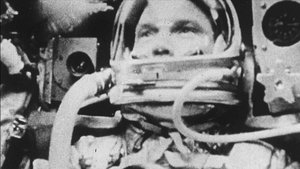
Man in Space
Horizon travels to the spacecraft center in Houston, Texas to study astronauts in space and how they react to being in space and the stresses of launching and re-entry.
Destination Mars / Editors in Conference"
Horizon looks at the possibilities of landing a man on the planet Mars. The Editors of two leading scientific magazines, Dennis Flanagan of the Scientific American, and Nigel Calder of the New Scientist, discuss with Gordon Rattray Taylor the problems of popularizing science and placing it in a social context.
Man meets Duck / The Picture Machines
Gordon Taylor meets with Konrad Lorenz, the inventor of ethology, and interviews him about his work on animal instinct and his theories about human instinct. The world knows all about the uncanny mathematical abilities of the computer. But what happens when these machines learn to draw?
Where must the Money Go? / Phantoms Incorporated
Horizon explores substitute 'phantoms' which are used in radiation studies, manned spaceflight experiments and accident research that gives valuable information on the limits of tolerance on the human body.
Genes in Action / Scientists and War
Dr. John Gurdon talks about the action of the chromosomes puffing when they undergo intense genetic activity. Sir Solly Zuckerman talks about his new book Scientists and War which outlines his views on the impact of science on affairs civil and military.
The Lonely Children
Horizon investigates the research conducted in England and America on the problems associated with autistic children.
Man of Science / 'Nature' Tomorrow
This episode of Horizon reports on the famous science fiction writer, H. G. Wells. An interview with John Maddox, the new editor of one of the world's most influential scientific journals, Nature, in which he discusses his ideas for bringing up-to-date the magazine's coverage of scientific events.
M.I.T.'s ABC / The Disturbed Child
Horizon reports on the the Massachusetts Institute of Technology. Many parents know that their child has a problem but do not have the necessary insight to deal with it. A psychiatrist uses drawings and paintings to reveal children's characters.
Ten Years in the Antarctic
Horizon looks at the scientific research being carried out in the Antarctic under the guidance the Scientific Committee for Antarctic Research (SCAR) which was formed in 1856.
The Athlete
Horizon investigates the stresses on athletes.
From Peenemunde to the Moon
Christopher Chataway presents a program on the development of the rocket, first as a weapon, and then for the American space program.
Sex-Change?
Doctors and psychologists talk about the problems inherent in the determination of sex.
The Structure of Life
This program shows the work of Ernst Chain, one of the discoverers of antibiotics, now a Professor of Biochemistry at the Imperial College in London.
The Wages of Science
The survival of Britain as an industrial power depends of science and on scientists. But are our scientists paid enough to attract them into the right jobs?